BIPV
February 25, 2026
Retrofitting is one of the most strategic ways to upgrade aging buildings while meeting new performance, safety, and sustainability goals. Mitrex solar facade allows existing structures to generate energy, improve appearance, reduce operational loads, and meet decarbonization goals, all while integrating cleanly via a rainscreen installation system.
Below is a practical, step-by-step checklist designed for building owners, developers, contractors, and consultants planning a retrofit with Mitrex BIPV Products.
A successful retrofit begins with clarity. Common retrofit drivers include:
Example Solution:
At St. Mary’s University, the goal was to replace a deteriorating facade while increasing energy output far beyond what rooftop solar could support. By defining performance goals early, the design shifted from a 28 kW rooftop system to a 90.2 kW BIPV facade, which met both aesthetic and sustainability objectives.
A structural and site evaluation ensures the retrofit plan aligns with what the building can support.
Assess:
Mitrex Solution Example:
During the Chinook Hospital retrofit, the existing facade required full replacement. Mitrex panels were installed using a standard rainscreen system that provided a seamless path to modernization without altering the hospital’s overall construction approach.
Retrofitting requires alignment with the local building code, especially for high-rise or healthcare applications.
Mitrex panels are tested for key requirements, including:
Mitrex Solution Example:
Projects like 1 Hamilton Street demonstrate how eFacade LITE integrates into existing buildings while satisfying high-rise safety and performance expectations. Mitrex testing allows design teams to move forward with confidence when addressing stringent requirements.
Design Assist is a key part of the retrofit process and helps project teams avoid delays or redesigns.
Mitrex supports teams by assisting with:
Mitrex Solution Example:
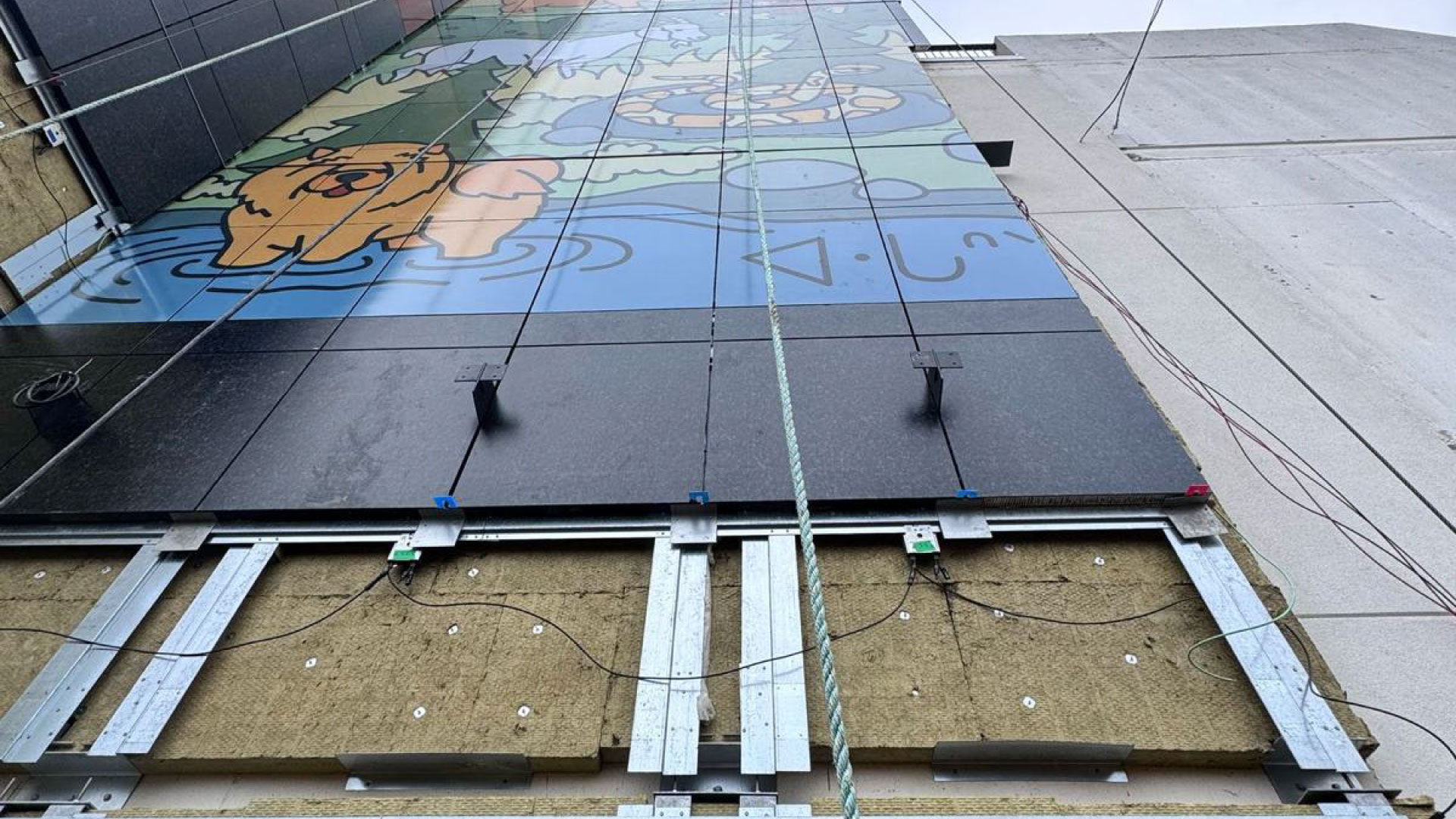
On The SunRise Retrofit in Edmonton, early collaboration with Mitrex and project partners was essential to developing a custom solar mural that reflects local culture while maintaining performance. Mitrex worked closely with the building team and the local artist to create tailored BIPV modules that matched the design intent, integrating artistic expression with on-site energy generation without compromising system efficiency.
Explore: https://www.mitrex.com/design-assist
For retrofits, sequencing determines efficiency and cost control.
Work with contractors to plan:
Mitrex Solution Example:
At 1154 Wilson Avenue in Toronto, the building was retrofitted and turned balcony railings into energy-generating assets using Mitrex SolaRail™ technology. The project replaced traditional balcony railings with approximately 4,000 LFT of BIPV railing, generating 162 kW of energy and improving the building’s appeal. Because the installation was conducted entirely from the exterior and used a lightweight retrofit solution, it minimized disruptions to residents and kept logistics predictable.
Solar facades require electrical planning that fits seamlessly into existing structures.
Checklist includes:
Mitrex Solution Example:
The Londonderry project in Hamilton highlights how Mitrex systems integrate electrical planning into complex retrofits. With approximately 11,000 SQFT of eFacade LITE installed, electrical routing and commissioning were coordinated alongside standard facade installation processes, ensuring consistent electrical performance across all elevations and minimizing the impact on construction sequencing.
BIPV facades become long-term energy assets. Ensuring proper QA and monitoring protects performance.
Mitrex provides:
Mitrex Solution Example:
Retrofits like Chinook and SunRise benefited from a rain-screen mounted solar facade that reduces long-term maintenance and preserves aesthetics without recurring refinishing needs.
A retrofit increases building value, capturing documentation that supports future leasing, financing, and operations.
Recommended documentation:
Owners frequently use this documentation to communicate improvements to stakeholders, lenders, and tenants.
Retrofitting with Mitrex panels offers a scalable way to modernize existing buildings while adding renewable energy generation, reducing long-term costs, and elevating architectural design. Whether the project involves a failing facade, strict energy targets, or aesthetic constraints, Mitrex’s proven retrofit solutions, from St. Mary’s to 1 Hamilton, show that existing structures can be successfully transformed.
News & Articles

Mitrex solar facades combine the function of building cladding with long-term on-site energy generation, transforming the building envelope into an income-generating asset. While upfront costs may exceed conventional materials in some scenarios, stacked incentives, operational savings, and long-term durability significantly improve lifecycle value and payback performance.
Mitrex solar facades combine the function of building cladding with long-term on-site energy generation, transforming the building envelope into an income-generating asset. While upfront costs may exceed conventional materials in some scenarios, stacked incentives, operational savings, and long-term durability significantly improve lifecycle value and payback performance.

Buildings account for a significant share of global carbon emissions, driven by both operational energy use and embodied carbon in construction materials. Building-Integrated Photovoltaics (BIPV) offer a unique opportunity to address both challenges simultaneously. By integrating solar energy generation directly into the building envelope, Mitrex BIPV systems enable buildings to generate clean electricity onsite while contributing to long-term energy efficiency and sustainability goals.
Buildings account for a significant share of global carbon emissions, driven by both operational energy use and embodied carbon in construction materials. Building-Integrated Photovoltaics (BIPV) offer a unique opportunity to address both challenges simultaneously. By integrating solar energy generation directly into the building envelope, Mitrex BIPV systems enable buildings to generate clean electricity onsite while contributing to long-term energy efficiency and sustainability goals.

Mitrex BIPV is engineered to match—and exceed—the lifespan of high-performance building envelope systems, delivering structural durability, long-term energy output, and measurable sustainability benefits. This article outlines the testing, certifications, and warranties behind solar facades designed to perform for decades across global climates and project types.
Mitrex BIPV is engineered to match—and exceed—the lifespan of high-performance building envelope systems, delivering structural durability, long-term energy output, and measurable sustainability benefits. This article outlines the testing, certifications, and warranties behind solar facades designed to perform for decades across global climates and project types.



.svg)
