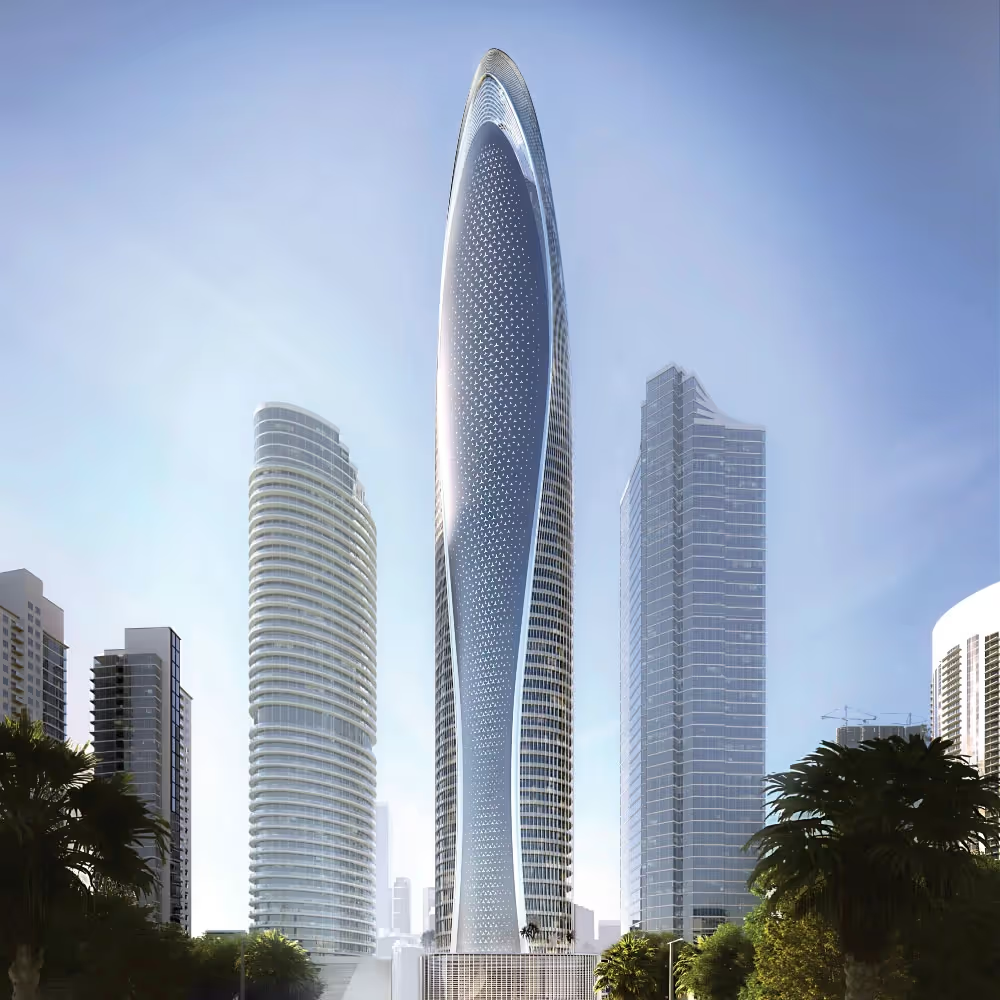
BIPV for Airports & Transportation Infrastructure
Why Use BIPVs in Airport Facilities?
Scroll down

Why Use BIPVs in Airport Facilities?
Explore BIPV By
Industry Sector
BIPV & Airports
Airports and transportation infrastructure require high-performance façades that support safety, resilience, sustainability, and long-term value. From glare control and acoustics to stringent fire and wind certifications, the building envelope must perform uninterruptedly under demanding operational conditions. Mitrex Building-Integrated Photovoltaics (BIPV) transform airport facades, curtainwall, canopies, and parking structures into maintenance-free, energy-generating architectural systems—without compromising safety or aviation standards.

Airports are among the most energy-intensive infrastructure assets, operating 24/7 with high electrical loads. Mitrex BIPV systems transform unused vertical and horizontal surfaces—terminal façades, curtainwall, control towers, parking facilities, bridges, walkways, and airside structures—into a continuous renewable-energy generator. On-site clean energy generation is a strategic opportunity for airport authorities seeking long-term operational savings and resiliency.

Mitrex BIPV supports sustainability goals by combining low-embodied-carbon materials with on-site renewable energy production, helping airports meet LEED, BREEAM, and ESG commitments. BIPV also offers strong lifecycle performance through energy payback, reduced operational expenses, and maintenance-free façade surfaces that lower cleaning and replacement costs over the asset’s lifespan. ROI modelling incorporates solar yield, initial investment, and long-term operating savings—allowing airport authorities to plan with confidence. Overall, BIPV enables airports to lower carbon impact, meet certification targets, and maintain long-term asset resilience while improving total lifecycle value.

Airport architecture must meet strict optical and reflectivity requirements to ensure safe aircraft operations and unobstructed visibility for pilots and air traffic control (ATC). Mitrex BIPV surfaces are engineered with low-reflective and low-gloss finishes that significantly reduce glare and prevent interference with flight paths, taxiing zones, and ATC tower sightlines. Acoustic performance, bird-safe options, and controlled optical behavior further support the specialized environmental and safety demands of modern airports.

Airports often serve as iconic gateways to a region, requiring visually distinctive façades and complex geometries that balance aesthetics with high technical performance. Mitrex provides full design-assist support, helping architects and airport authorities integrate BIPV into tilted surfaces, curved or faceted façades, shading fins, corners, and large-scale terminal features. Our team collaborates from early concept through final detailing to ensure structural compatibility, aviation-safe reflectivity levels, and seamless integration across curtainwall, cladding, canopies, and parking structures.

Safety, compliance, and performance are central to airport design. Mitrex BIPV systems are tested and certified to meet or exceed international standards for solar performance, fire safety, wind resistance, and environmental durability. These certifications ensure that educational facilities can achieve long-term safety and risk mitigation while adopting advanced sustainable technologies.
Plug and play BIPV in 5 colors and 2 sizes.
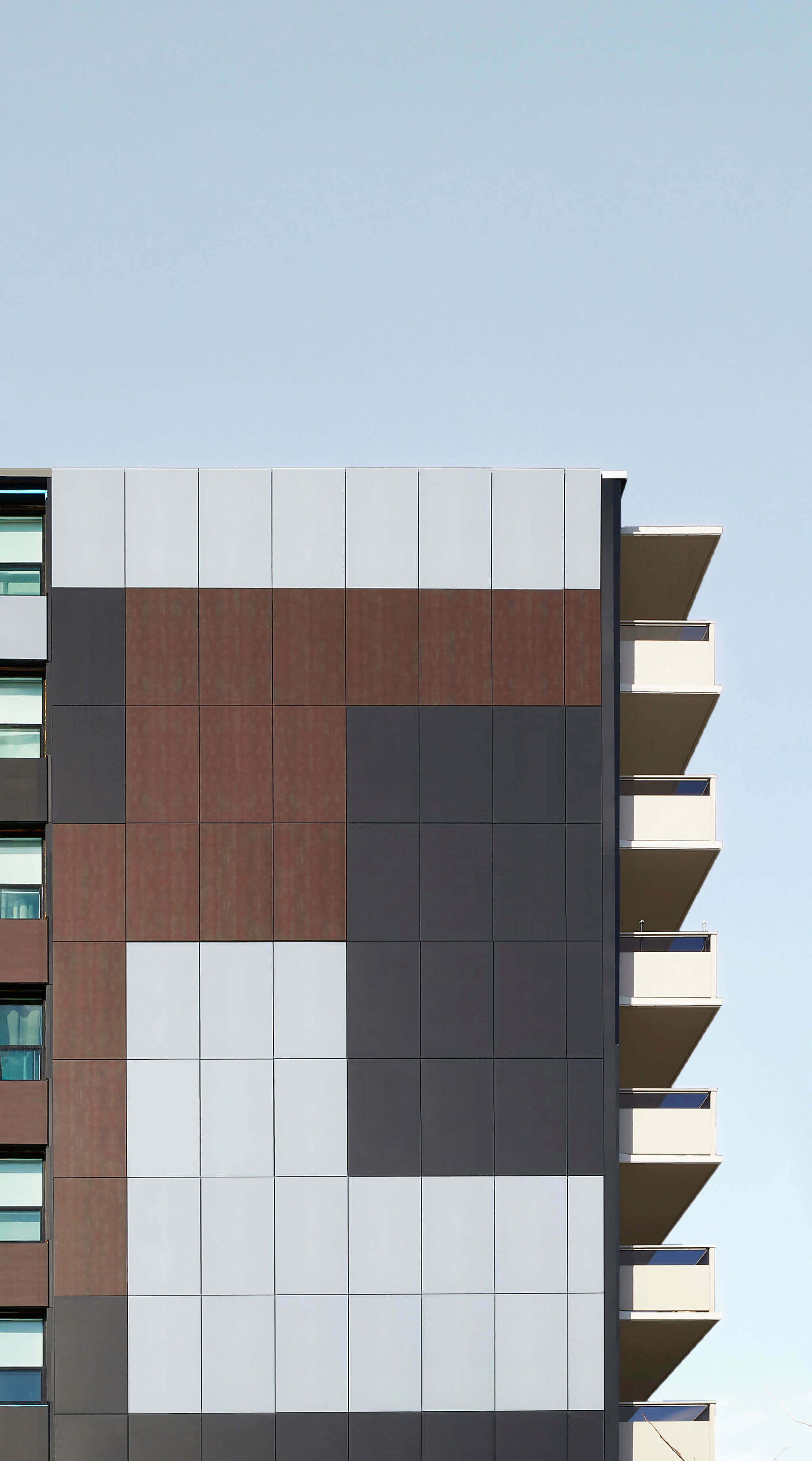
Large colorway with rainscreen system.

Custom BIPV in any color, size & system.

Angled BIPV architectural panels.
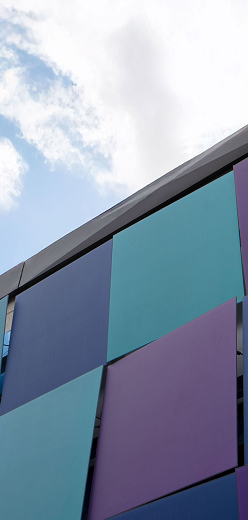
High-performance, energy-generating architectural glass.

Mitrex BIPV glass is engineered with low-reflective and low-gloss surfaces, with reflectance as low as ~7% and gloss as low as ~5° at 85°, helping avoid interference with pilots, taxiing aircraft, and ATC tower sightlines. FAA-compatible glare analysis data and modeling can be provided to support design and approvals, ensuring compliance with aviation safety standards including FAA AC 150/5370-2G and ICAO Annex 14 requirements. We coordinate with airport planners and aviation authorities early in design to address any concerns.
Yes. Systems are tested for high wind loads (meeting requirements for airport locations often subject to severe weather), wide temperature swings, high humidity, UV exposure, and corrosive environments such as sea-air exposure in coastal airport locations. They are engineered for long service life in challenging airport conditions while maintaining structural integrity, energy performance, and visual quality. Impact resistance testing ensures durability against bird strikes, hail, and debris. This reliability is essential for the demanding 24/7 operational environment of aviation infrastructure.
Mitrex façades generate on-site renewable energy and use low-embodied-carbon materials supported by LCAs and EPDs, helping airports meet net-zero, LEED, BREEAM, Airport Carbon Accreditation, and ESG frameworks. Energy output can be tied to carbon-reduction metrics and sustainability reporting across terminals and transportation assets—supporting aviation industry's climate commitments, regulatory requirements, and passenger expectations. Many airports have carbon neutrality goals by 2030-2050, and BIPV provides visible progress toward these targets.
Yes. BIPV can be integrated into terminal façades, bridges, elevated walkways, connector buildings, control towers, parking structures, ground transportation centers, and transit hubs, turning multiple surface types into cohesive, energy-generating envelope that also enhances the airport's visual identity and architectural presence. This comprehensive approach maximizes renewable energy generation across entire airport campus. Parking structures represent particularly significant opportunity given their large surface areas and solar exposure.
Airports often feature folded, curved, or tilted façades, dramatic canopies, and signature architectural elements. We provide full design-assist support to integrate BIPV into complex geometries, shading fins, sculptural forms, corners, and large-scale architectural features while maintaining aviation-safe optical performance and structural compatibility. This enables iconic airport designs to incorporate renewable energy generation seamlessly. Custom panel shapes, curved panels, and coordinated layouts support architectural vision while delivering energy performance.
By combining long-life, maintenance-free façade with energy generation, BIPV reduces cleaning and access costs, lowers utility expenses, and improves lifecycle value. ROI modeling includes solar yield, payback periods, operational savings, avoided costs (compared to both cladding replacement and separate solar installation), and 60-year service life, enabling airport authorities to plan long-term cost reductions and resilience investments—critical for infrastructure with multi-decade planning horizons and complex funding structures including bonds and PFCs (passenger facility charges).
Maintenance is similar to high-quality glass or metal façades. The exterior glass surface includes anti-soiling and hydrophobic properties reducing dirt build-up and making cleaning faster and less frequent. Routine maintenance typically involves visual inspections for damage or soiling and periodic cleaning aligned with your building's overall façade maintenance program. The system is designed to be virtually maintenance-free over its 60-year lifespan, significantly reducing long-term operating costs and access requirements compared to traditional cladding materials that may require refinishing, repainting, or replacement.
Our structured collections include Genesis Solar Series (earthy, textured finishes mimicking stone, concrete, and metal) and Exodus Solar Series (bold, uniform architectural colors with smooth finishes). For eFacade PRO+, we offer an 'open palette'—virtually any color, pattern, or texture including matches to RAL, Pantone, or branded colors. We can work with you to match specific materials like limestone, sandstone, cedar, or other cladding materials you're specifying. Custom color matching is available with consideration for the color-vs-power trade-off (darker tones generally deliver higher energy yield). We provide sample chips, larger mockup panels for side-by-side comparison, and guidance on how color choices impact W/ft² and annual kWh.
Mitrex BIPV installs very similarly to standard rainscreen or cladding. The primary trade is the façade installer or cladding contractor who manages rails, brackets, panel installation, and often assists with running low-voltage wiring behind panels. A licensed electrical contractor handles tying into building electrical infrastructure—inverters, combiners, disconnects, and main service. Our engineering team provides clear scope definitions and connection diagrams so GCs can allocate responsibilities between trades without ambiguity.
BIPV can integrate with bird-deterrent features if required, doesn't create wildlife attractants, and maintains Wildlife Hazard Management Plan compliance. Non-reflective finishes reduce bird confusion, unlike highly reflective glass.
Inspiration
Discover inspiring projects that showcase how Mitrex BIPV solutions enhance design, sustainability, and performance in modern facilities.

.svg)


.avif)