
Enhance Your Recommendations with Mitrex
Explore BIPV By
Industry Sector
Why Mitrex
Mitrex provides engineers with rigorously tested solar façade systems that maintain compliance with structural, thermal, moisture, electrical, and fire-safety requirements. From early-stage design to stamped engineering packages, Mitrex supports engineers with comprehensive technical documentation, standardized mounting systems, and verified performance data.
Whether supporting new construction, recladding, deep-energy retrofits, or portfolio-wide upgrades, Mitrex BIPV offers a predictable, fully engineered approach to integrate renewable energy into façades without redesigning the entire envelope.

Mitrex BIPV panels function as fully engineered cladding units, allowing seamless integration into conventional rainscreen and unitized wall systems. Our engineering support ensures that Mitrex systems fit seamlessly into both new and existing wall assemblies. From early-stage design to final stamped documents, we provide complete technical coordination to reduce redesign effort, streamline consultant reviews, and ensure full code compliance. Engineers can incorporate energy generation without modifying envelope fundamentals.

Mitrex provides complete technical packages to support compliance, permitting, and construction documentation. Mitrex BIPV systems are engineered to meet rigorous global standards, including UL 61730, UL 61215, NFPA 285, EN 13501 A2-s1,d0 fire classification, ASTM E1996 for impact resistance, and ASTM E330 for wind load performance.

Mitrex systems reduce engineering complexity by combining architectural cladding with integrated power generation—eliminating separate racking systems, rooftop penetrations, and redundant structural components.

Mitrex BIPV systems are engineered for direct compatibility with conventional façade construction methods, allowing general contractors to integrate solar cladding into their project scopes without relying on specialized photovoltaic installers. All modules are designed as prefabricated rainscreen cladding units, enabling straightforward attachment to standard subframing systems while maintaining full compliance with structural, electrical, and fire-safety requirements.

Architect:
MVRDV, Diamond Schmitt Architects
Developer:
University of Toronto
Engineer:
Engagement Step:
Schematic Design Stage
Cladify collaborated closely with Mitrex to optimize panel size, finish, color, and solar power equipment integration. All decisions balanced aesthetic requirements with photovoltaic performance goals, enabling the solar-active façade to meet energy benchmarks without compromising architectural intent.


Cladify collaborated closely with Mitrex to optimize panel size, finish, color, and solar power equipment integration. All decisions balanced aesthetic requirements with photovoltaic performance goals, enabling the solar-active façade to meet energy benchmarks without compromising architectural intent.
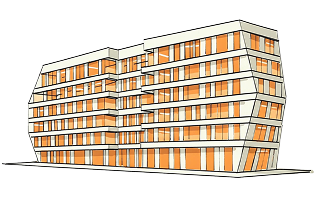
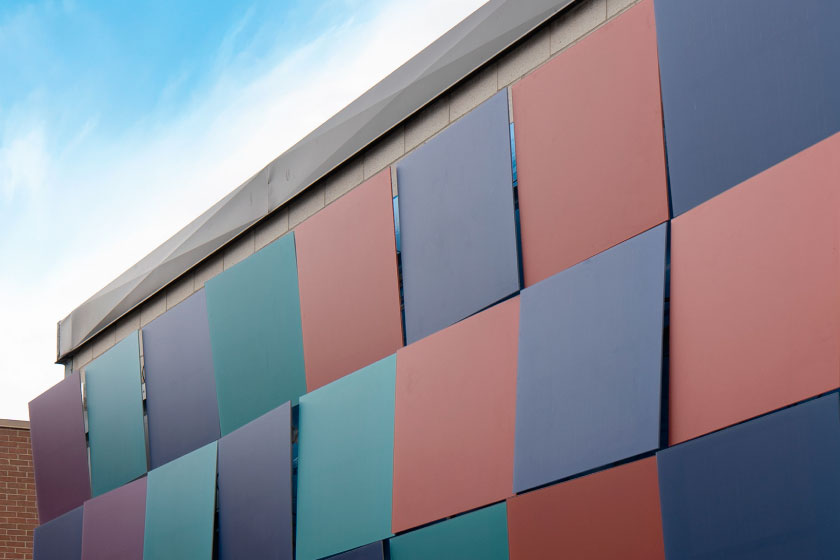
Plug and play BIPV in 5 colors and 2 sizes.
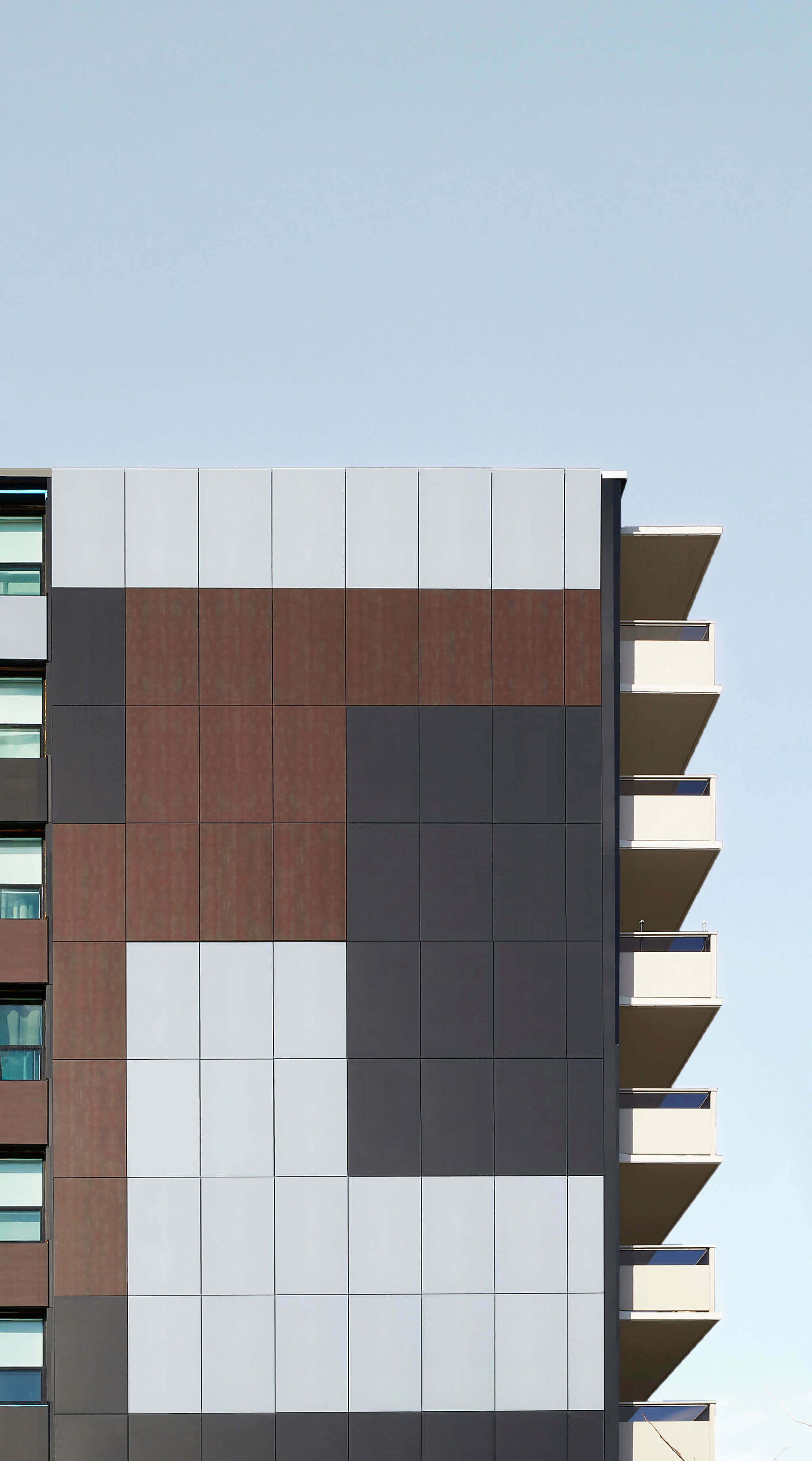
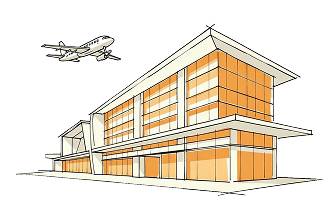
Large colorway with rainscreen system.

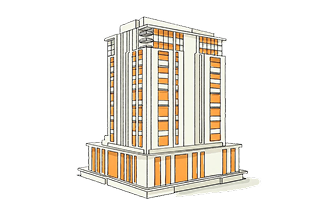
Custom BIPV in any color, size & system.

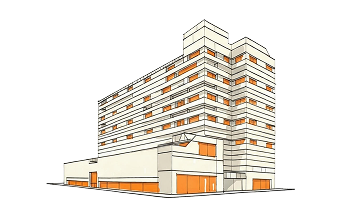
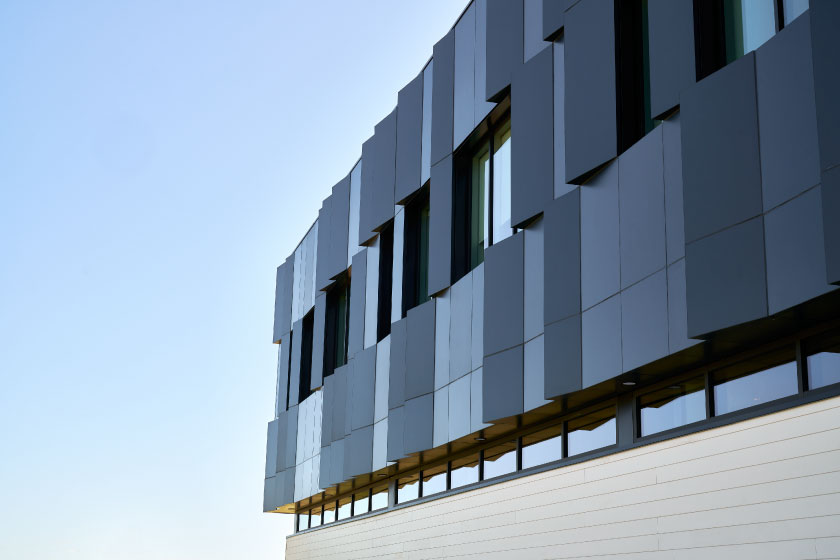
Angled BIPV architectural panels.
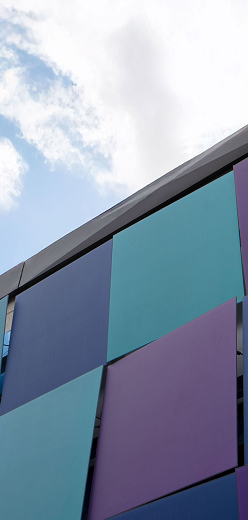
High-performance, energy-generating architectural glass.

Systems are engineered to meet international standards including PV & safety (UL 61730, UL 61215), impact and structural performance (ASTM E1996, ASTM E330), and fire performance (NFPA 285, CAN/ULC-S134, EN 13501 A2-s1,d0). Systems feature non-combustible components. For each project, we provide test reports, classification summaries, engineering letters, and product data sheets demonstrating code compliance for PV, cladding, and fire requirements. These documents are formatted for inclusion in submittal packages and are updated regularly to reflect current testing and certifications.
Mitrex BIPV behaves like advanced cladding with added electrical functionality. Panels mount to adjustable subframing accommodating irregular substrates and out-of-tolerance conditions. Systems work on new builds as primary rainscreen cladding, retrofits over existing backup walls, or integrated with curtain wall/unitized systems. Coordination covers support spacing and loads (vertical rails, brackets, anchor plates), interfaces with windows, corners, parapets, and other transitions, plus integration with AVB, insulation, and fire-stopping to maintain continuous high-performance envelope. We provide detailed coordination drawings showing all critical interfaces.
We provide detailed PV performance parameters—efficiency, Voc (open circuit voltage), Isc (short circuit current), Pmax, fill factor, temperature coefficients, and W/ft² ranges—for use in tools like EnergyPlus, PVsyst, or custom modeling. Project teams can access guidance on estimating annual kWh, system losses, degradation rates, and expected performance under different orientations, tilt angles, and colors. This data helps engineers and energy modelers build robust production and financial models for BIPV facades. We can also provide shade study analysis using 3D models to account for site-specific conditions.
We provide comprehensive packages including BIM families and Revit objects for typical panel types and assemblies, CAD details (DWG/PDF) showing mounting, joints, corners, parapets, base conditions, and integration with windows and other systems, 3-part guide specifications adaptable to Division 07 or 08, engineer-stamped shop drawings during submittals including layout drawings and attachment details with structural notes, and product data sheets, EPDs, and PV performance data. Visit our downloads page to access these resources. These materials reduce guesswork, speed coordination, and ensure proper representation in construction documents.
We work with project's electrical engineer and contractor to define string layouts, combiner/inverter locations, DC routing, AC interconnection, and monitoring strategies. Single-line diagrams (SLDs), equipment schedules, load calculations, and coordination drawings can be provided to support permit submissions and utility approvals. Wiring is typically concealed in façade cavity or designated raceways, with panels plugging into pre-planned junction points so façade behaves like continuous array while aligning with building-code and NEC requirements. We coordinate on inverter sizing, equipment specifications, and clearance requirements.
Retrofits require structural assessment to verify existing walls can support added load (~5-7 lb/SF), reviewing original drawings and conducting field investigation. Most buildings can accommodate BIPV without reinforcement, due to the lightweight nature of the BIPV panels and systems.
Mitrex BIPV uses high-efficiency solar cells (typically ~22% cell efficiency), while the delivered panel power density depends on architectural choices and site conditions. As a practical planning range, output is often ~7–18 W/ft² (75–196 W/m²) depending on factors like orientation, tilt, color/opacity, cell spacing, and shading. Because BIPV is part of the building envelope, we typically provide owners and design teams with a clear estimate of annual production (kWh/year), expected bill offset, and performance assumptions (soiling, temperature, inverter losses, etc.) rather than relying on a single nameplate number.
Not in most cases. The cladding portion installs similarly to panelized rainscreen systems using familiar façade practices (layout, brackets/rails, panel setting, joints, and detailing). Any qualified façade/cladding contractor experienced with panel systems can typically install it. The key difference is electrical: routing leads and coordinating homeruns/combiner locations. A licensed electrician is required for final electrical connections and commissioning. We provide installation training, layout guidance, and electrical coordination details so façade and electrical scopes stay clean and efficient.
We work with GC and electrical contractor to identify suitable locations for inverters, combiners, transformers (if required), and disconnect switches—typically in main electrical room, rooftop penthouse, or dedicated mechanical spaces. All junction points, cable routes, and equipment locations appear on project drawings and single-line diagrams (SLDs). Façade installer typically connects panel leads into designated junctions behind cladding, while electrical contractor completes conduit runs, equipment terminations, and final tie-in to building distribution. This division aligns responsibilities with each trade's expertise while maintaining clean, coordinated electrical design.
From a site perspective, workflow is almost identical to high-quality rainscreen: anchors, brackets, vertical rails, and prefabricated panels arriving labeled and ready to hang. The main difference is panels include integrated wiring and connection points that plug into pre-planned junctions. Prefabricated BIPV modules streamline installation and reduce on-site fabrication, allowing crews familiar with conventional cladding to adapt quickly with minimal additional training. Standard glass-handling equipment is typically sufficient.
Learn More
Whether you're managing rental housing, universities, or commercial buildings, Mitrex helps you meet energy goals and unlock building energy credits.
Get in touch with a member of our team for direct assistance.
See our interactive building simulator to estimate the energy potential of your project.
Have a question about your project? Visit the FAQ.
Projects
Each of our projects is a story of innovation and sustainable architecture.

.svg)