BIPV for Educational Buildings
Why Use BIPVs in Educational Facilities?
Scroll down
.jpg)
Why Use BIPVs in Educational Facilities?
Explore BIPV By
Industry Sector
BIPV & Educational Facilities
Educational buildings, from primary schools to higher-education universities, colleges, and research campuses, demand spaces that promote learning, innovation, and sustainability. From safety and comfort to aesthetics and efficiency, façade design plays a crucial role. With Mitrex’s Building-Integrated Photovoltaic (BIPV) systems, façades, glazing, and cladding become renewable-energy assets—enhancing design while meeting sustainability and performance goals.

Educational institutions increasingly prioritize sustainability and energy generation as part of their infrastructure strategy. Mitrex BIPVs turn campus buildings into power-producing assets that help achieve carbon reduction targets and align with green certification systems. With available Environmental Product Declarations (EPDs), institutions can document the environmental benefits of each installation and advance toward LEED, BREEAM, or ESG frameworks.

Schools, colleges, and universities are often highly concerned with sustainability, budget-sensitive, requiring cost-effective, long-term solutions. Mitrex BIPV façades help reduce operational costs through on-site energy generation while preserving asset value. With access to grants and Power Purchase Agreement (PPA) options, institutions can implement renewable technologies with lower upfront investment and strong lifecycle ROI.

Educational campuses face daily wear and tear from weather exposure and high occupant use. Mitrex systems are engineered for longevity, durability, and easy maintenance. Self-cleaning, maintenance-free surfaces, simple panel replacement, and lifetime warranties ensure that facilities can maintain performance and aesthetics for decades with minimal operational impact or maintenance downtime.

Architectural design in education goes beyond functionality—it represents identity, innovation, and inspiration. Mitrex supports architects through design-assist services to achieve creative, high-performance façades that optimize learning environments for daylight, comfort, and acoustics. Each project can be customized to include advanced finishes, acoustic glass, and even donor-integrated features that reflect institutional values.

Safety, compliance, and performance are central to institutional design. Mitrex BIPV systems are tested and certified to meet or exceed international standards for solar performance, fire safety, wind resistance, and environmental durability. These certifications ensure that educational facilities can achieve long-term safety and risk mitigation while adopting advanced sustainable technologies.

Educational facilities are frequently upgraded, expanded, or modernized. Mitrex BIPV systems are adaptable for new builds, additions, and retrofits—enabling phased construction with minimal disruption to learning environments. Prefabricated modules and simplified installation methods ensure faster timelines and reduced interference with building operations during construction.
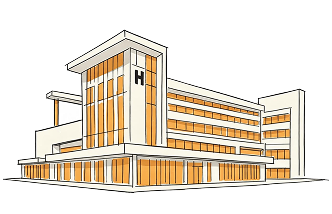
Plug and play BIPV in 5 colors and 2 sizes.
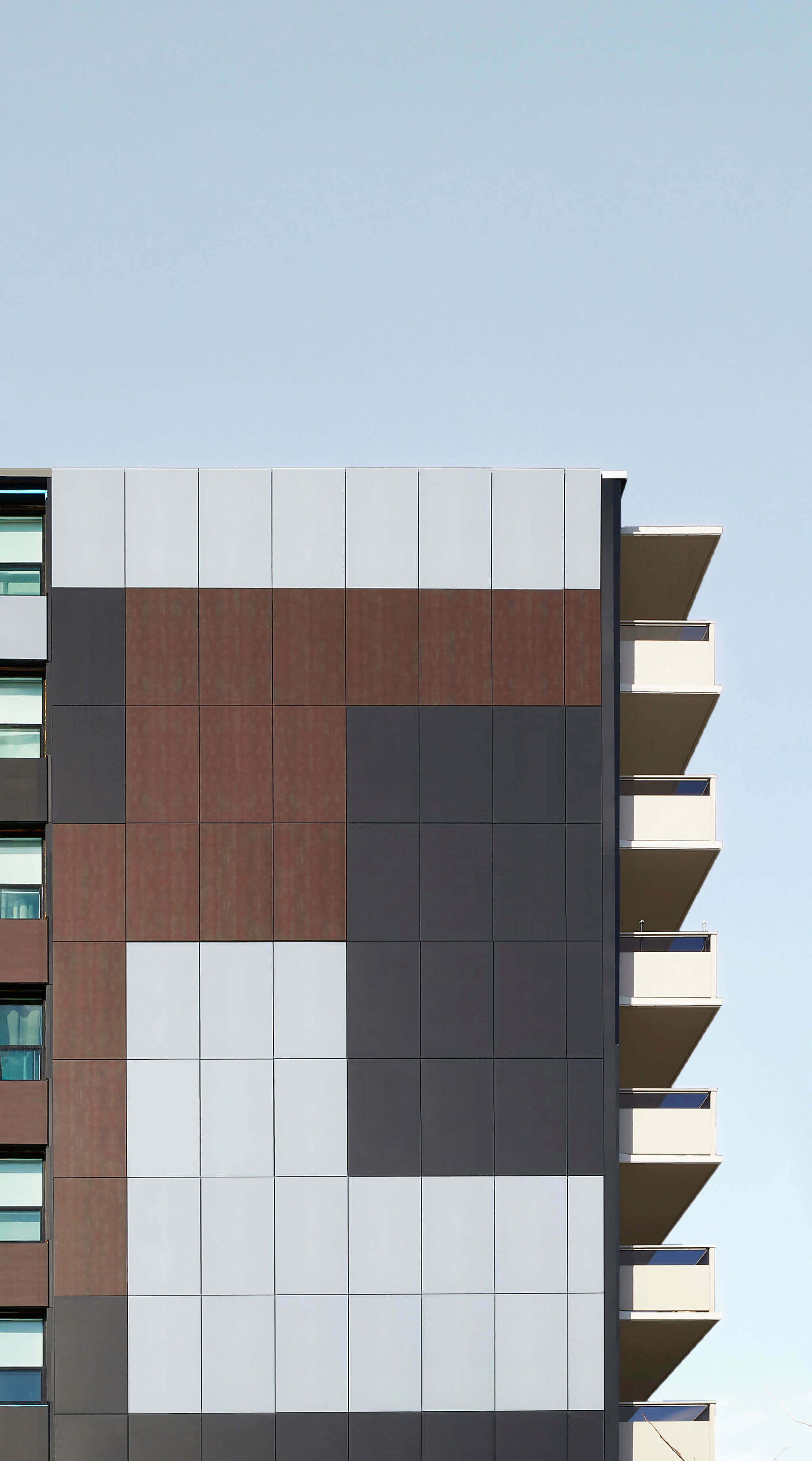
Large colorway with rainscreen system.

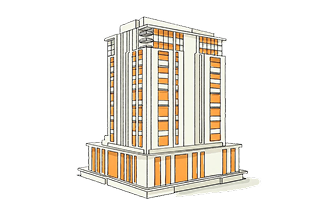
Custom BIPV in any color, size & system.

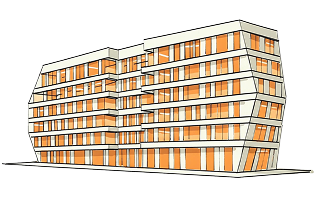
Angled BIPV architectural panels.
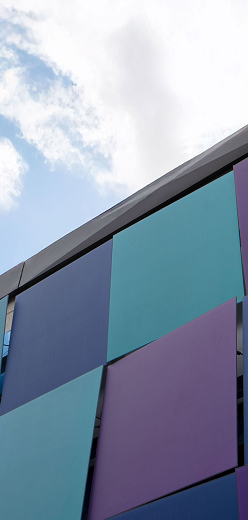
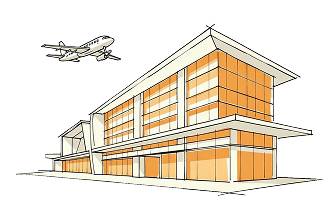
High-performance, energy-generating architectural glass.

Mitrex BIPV transforms façades, glazing, and cladding into on-site energy generators, helping institutions reduce operating costs and carbon emissions while moving toward LEED for Schools, BREEAM, and ESG commitments. Full Environmental Product Declarations and lifecycle data support transparent sustainability reporting and climate action plans—demonstrating institutional commitment to environmental stewardship. BIPV also provides educational opportunities, serving as a visible teaching tool for students about renewable energy, building science, and sustainability. Real-time monitoring can be integrated into curriculum and building dashboards.
BIPV reduces energy spend by generating electricity directly from building envelope while delivering durable, maintenance-free façade. With 60+ year service life and minimal upkeep, schools benefit from long-term cost control and improved asset value. Energy savings can be redirected to educational programs, faculty, and facility improvements. We provide lifecycle ROI models and can structure financing through grants, Power Purchase Agreements (PPAs), or energy performance contracts that minimize or eliminate upfront capital requirements. Educational institutions often qualify for special utility programs and state/federal grants.
Systems are well-suited for phased retrofits and additions. Prefabricated panels and simplified installation methods enable work to be scheduled around academic calendars—summer breaks, semester transitions, exam periods, and campus events—with exterior access and minimal disturbance to classrooms, labs, libraries, and residences. This flexibility is essential for maintaining educational continuity during facility improvements. Work can be sequenced building-by-building or elevation-by-elevation to minimize impact on campus operations and student experience.
BIPV systems are backed by long-term, performance-based warranties. Panels are designed for 60-year service life and are virtually maintenance-free. Lifetime warranty guarantees 25-year product warranty covering façade as building material, and 25-year performance warranty (typically around 80% of initial output at year 25). This long-term reliability aligns with educational institutions' multi-generational planning horizons and deferred maintenance reduction strategies. Maintenance is minimal—similar to glazed façades with periodic inspections and cleaning—reducing ongoing facilities management burden.
Systems are adaptable to new construction, additions, and retrofits. Lightweight, prefabricated modules (around 5-7 lb/SF) can be mounted over existing façades or used as primary cladding on new buildings, allowing schools to modernize older structures while preserving or enhancing their architectural character. This is particularly valuable for historic campuses seeking to balance preservation requirements with sustainability goals. Custom colors and finishes can be matched to original materials. We work with historic preservation consultants to develop appropriate integration strategies.
Educational institutions often qualify for grants (Department of Energy, state energy offices), incentives and rebates (utility programs often have educational carve-outs), Power Purchase Agreements that eliminate upfront costs, and energy performance contracts with guaranteed savings. We coordinate with owners and advisors to map eligible programs and structure BIPV as energy investment supporting both financial and sustainability objectives. Many jurisdictions offer specific programs for K-12 schools, community colleges, and universities pursuing renewable energy projects. Educational projects may also access low-interest loans and bonds.
Yes. BIPV works well for new construction and for retrofits where the building is being re-clad or over-clad. For retrofits, we typically evaluate the existing structure and attachment strategy, the rainscreen cavity, air/water barrier condition, and thermal upgrades, and electrical routing paths to inverters/electrical rooms. Retrofit projects can be especially attractive because you’re often already investing in envelope renewal—BIPV lets that same scope also deliver on-site generation and a long-term operating cost offset.
Maintenance is similar to high-quality glass or metal façades. The exterior glass surface includes anti-soiling and hydrophobic properties reducing dirt build-up and making cleaning faster and less frequent. Routine maintenance typically involves visual inspections for damage or soiling and periodic cleaning aligned with your building's overall façade maintenance program. The system is designed to be virtually maintenance-free over its 60-year lifespan, significantly reducing long-term operating costs and access requirements compared to traditional cladding materials that may require refinishing, repainting, or replacement.
We provide cradle-to-grave EPDs per ISO 14025 showing embodied carbon typically 40 kg CO2e per SF, which is repaid in 2-4 years through displaced grid electricity. LCA data is available for LEED, Living Building Challenge, and other sustainability frameworks.
Yes, custom colors can match school brand colors precisely through RAL matching or custom color formulation. Some schools incorporate logos, mourals, mascots, or patterns through digital printing or creative panel layouts.
Inspiration
Discover inspiring projects that showcase how Mitrex BIPV solutions enhance design, sustainability, and performance in modern facilities.

.svg)