
Solar Facade
October 16, 2024
As sustainability becomes a defining pillar of modern construction, architects and developers are searching for technologies that don’t compromise aesthetics or add complexity. One of the most effective tools? Lightweight solar cladding systems that integrate clean energy generation directly into a building’s exterior. Mitrex’s eFacade LITE is one such system — a Building-Integrated Photovoltaic (BIPV) product that combines functionality, form, and efficiency into a single lightweight panel.
Unlike traditional solar setups that require structural reinforcements or extensive mounting frameworks, eFacade LITE is engineered for lightweight integration. Each BIPV module weighs approximately 13.4 kg/m²— significantly reducing structural load and simplifying installation.
Designed for projects seeking rapid deployment, lower costs, and simplified electrical integration, LITE panels feature a built-in PowerBar that enables plug-and-power up wiring on site.
One of the standout features of eFacade LITE is its visual flexibility. Panels are available in a range of 5 colours, all in a satin-finish. These options allow architects to match or contrast existing façade designs, or use the modules as a visual highlight within the envelope.
Module dimensions are:
These flexible formats allow design teams to work with standard panel sizes or combine them with opaque cladding elements to form cohesive patterns across the building envelope.
Despite its light weight, eFacade LITE delivers meaningful energy output. Its BIPV modules produce between 10 to 18 W/ft² depending on the colour selected . This means project teams can reduce operational energy costs while supporting long-term decarbonization goals.
Mitrex solar facade products physically last the lifetime of the building and beyond as a building envelope product. Every module has a guaranteed energy output of 80% by year 25, ensuring consistent power generation across decades of use — an essential factor in achieving green building certifications and meeting ESG targets.
Because of its minimal structural impact, eFacade LITE is especially suitable for building retrofits where existing facades are due for an upgrade. Whether it’s a recladding project or a full envelope overhaul, developers can incorporate solar generation without the need to reinforce the base structure.
This adaptability empowers older buildings to meet modern sustainability standards while improving curb appeal and long-term asset value.
In addition to energy performance, eFacade LITE meets international standards for safety and durability:
These certifications ensure the system is suitable for extreme weather zones and meets the code requirements of jurisdictions across North America and beyond.
Lightweight solar cladding is no longer a trade-off — it’s a design advantage. With its streamlined installation, high-efficiency output, and design-forward customization, Mitrex eFacade LITE empowers building professionals to meet energy mandates without sacrificing creative vision.
Explore more about how eFacade LITE supports modern architecture:
News & Articles
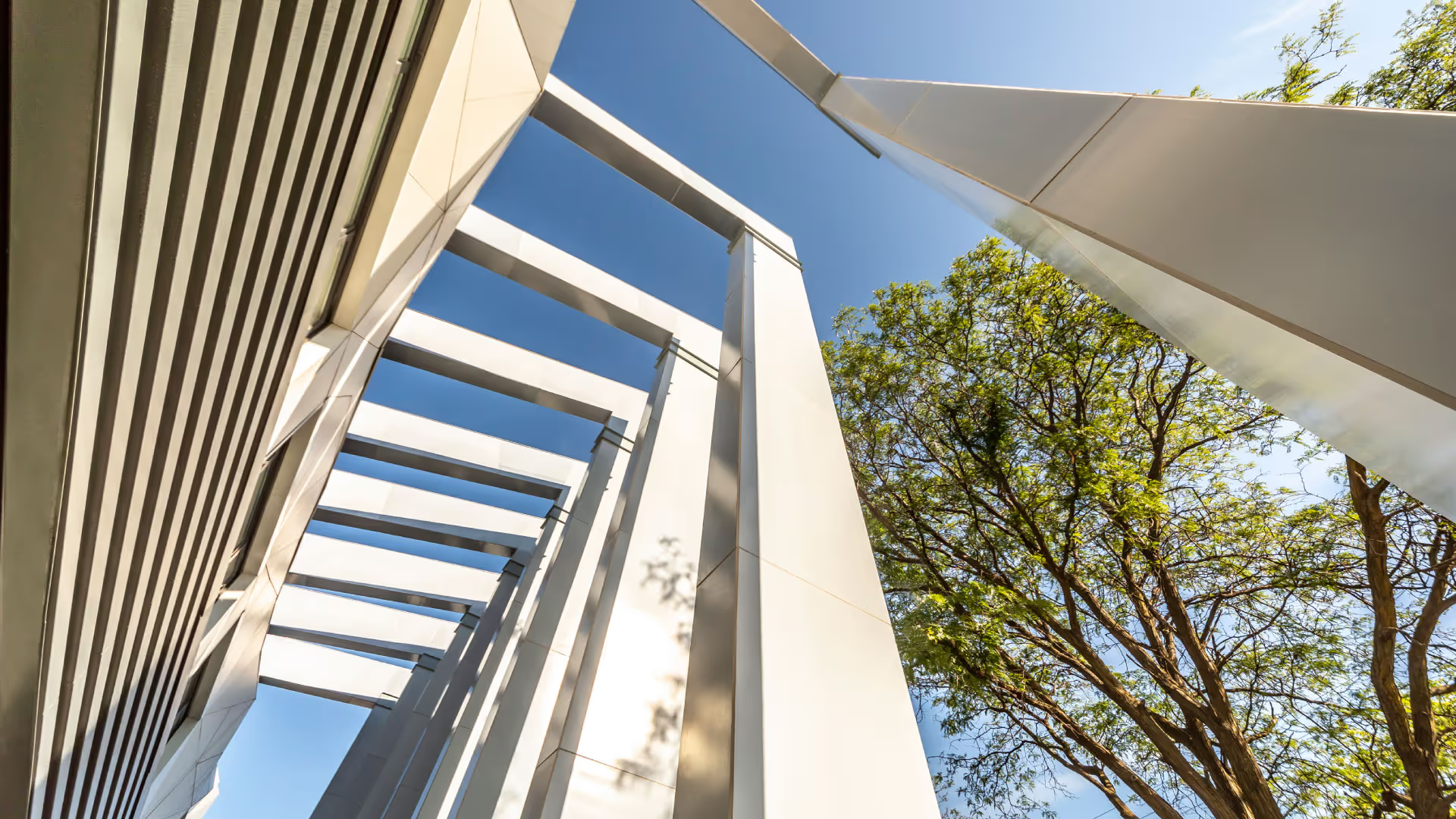

Mitrex’s customizable solar panels merge sustainability with design, transforming buildings into solar-powered works of art.
Mitrex’s customizable solar panels merge sustainability with design, transforming buildings into solar-powered works of art.

Discover how Mitrex collaborates with architects and developers to create innovative, energy-efficient buildings. Learn how their process shaped the Industrial Wall in Toronto and redefined sustainable architecture.
Discover how Mitrex collaborates with architects and developers to create innovative, energy-efficient buildings. Learn how their process shaped the Industrial Wall in Toronto and redefined sustainable architecture.

Compare eFacade LITE and PRO to find the ideal solar facade, balancing energy efficiency, customization, and installation ease. Discover which system best suits modern architectural needs.
Compare eFacade LITE and PRO to find the ideal solar facade, balancing energy efficiency, customization, and installation ease. Discover which system best suits modern architectural needs.



.svg)
